What happens when a classic short story becomes a courtroom case?
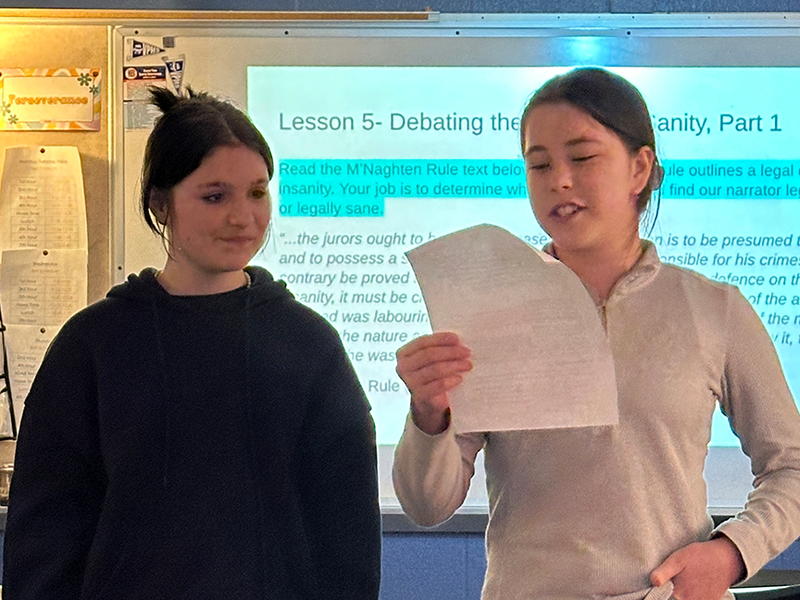
In our 7th Grade ELA class, VPMS students are stepping into the roles of attorneys to put The Tell-Tale Heart by Edgar Allan Poe on trial. This engaging approach changes reading from a passive activity into an active, thought-provoking experience that strengthens comprehension, critical thinking and communication skills.
Rather than simply answering questions about the text, these built arguments and defended their stance on the case. They chose whether the narrator is guilty, mentally unstable or both, using direct evidence from the story to support their claims. This has the 7th grade students move from simply summarizing what happened to explaining why it matters and how they know.
One of the most powerful outcomes of a mock trial is how naturally it encourages students to revisit the reading. Instead of rereading because they’re told to, our students had to go back to find specific evidence that strengthened their case. They examined the tone of the story and key facts more closely. This helped them develop a deeper understanding of the narrator’s reliability and the story’s underlying themes.
This type of lesson goes far beyond literature. As students prepare for and participate in the trial, they develop essential real-world skills such as critical thinking, public speaking, collaboration and confidence. They learn how to organize their thoughts, anticipate opposing viewpoints and respond thoughtfully, skills that are valuable in any setting.
By putting The Tell-Tale Heart on trial, the students did more than study literature. They practiced thinking deeply, supporting their ideas with evidence and engaging in meaningful discussion. This exercise was definitely one they will remember.
Check out the student "attorneys" as they fought for or against the narrator.